
Conscious or not
I didn’t really expect to win the prize (well done Anil Seth), but what triggered my entry was my sister’s death last year in July.

Dear Berggruen Essay Competition Participants
Thank you for participating in the 2025 Berggruen Prize Essay Competition! We have announced the winners and published their winning essays. Please find the public announcement here.
This year, we received over 3,000 submissions from 120+ countries and conducted several rounds of rigorous, blind review to select the final winners. While your essay was not among the winners, we deeply appreciate your participation and the thoughtfulness of your work.
We encourage you to stay connected and sign up for updates on future calls for submissions here.
Additionally, with this email, we release all rights to your submission, effective immediately. Please feel free to explore other publishing opportunities with your essay.
Thank you once again for your contribution. We look forward to seeing your future work!
Sincerely,
The Berggruen Essay Competition Team
Prof G’s response
I didn’t really expect to win the prize, but what triggered my entry was my sister’s death last year in July. Many of you were very kind to me in response to my newsletter after her death (please see ‘Planning for Death’, 11-Aug-2025).
As promised, you can now download and read my essay.
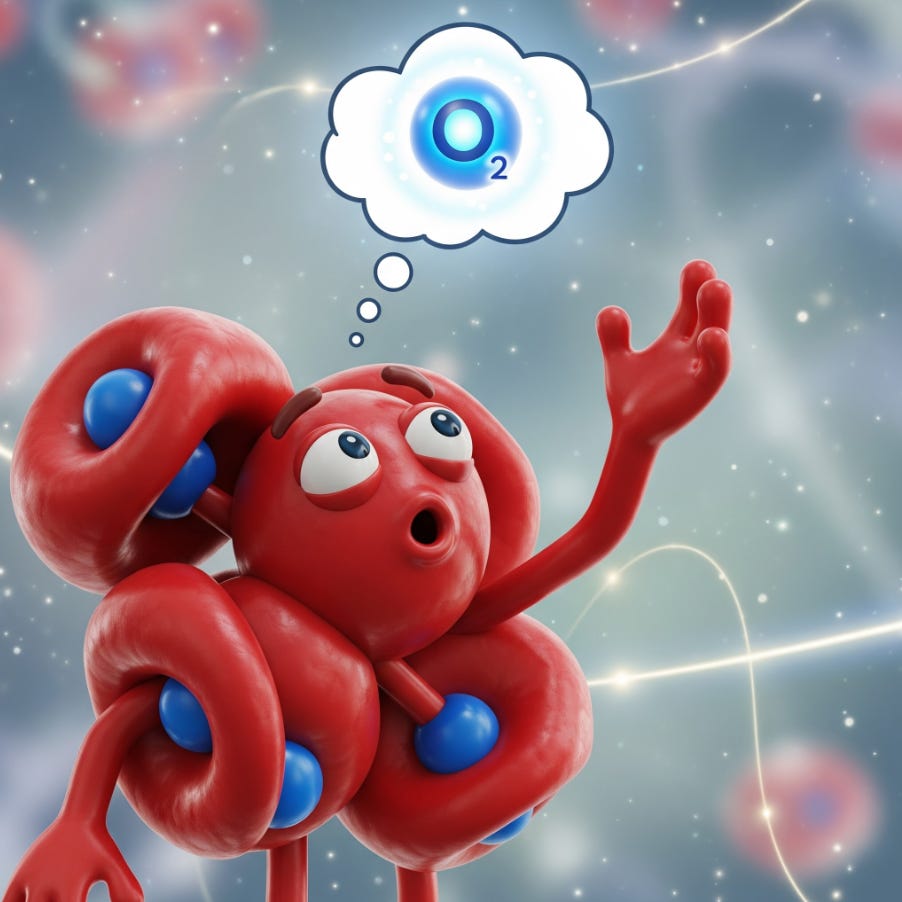
We all know what it feels like to be conscious, but trying to define and study consciousness is a challenging task. Most neuroscientists and philosophers take a brain-centric approach to consciousness, which is probably a view that is too narrow. If consciousness is a product of complex systems, one could argue that systems without a biological brain are also conscious. In this essay, I take a reductionist approach and define consciousness as a relatively simple reflex arc underpinned by data, information, an affector or sensor and an effector response or output. This consciousness arc must also have agency or a purpose, which enables systems in which it is embedded to sense and respond to changes in their environment. Conscious agents can provide feedback to support and improve their functioning, ensuring they survive and propagate themselves. Conscious agents are typically linked to one another to form a system. Sentient consciousness, or a sense of self, is the evolutionary consequence of needing complex behavioural responses to potentially life-threatening situations and to become social. The ability to socialise and form societies is what empowers cultural evolution. I use haemoglobin, an oxygen-sensing and carrying molecule, to illustrate and define consciousness as an information-agency unit.
Accidental readers
If you have been forwarded this email and are not an MS-Selfie subscriber, please consider subscribing and helping MS-Selfie expand its resources for the broader MS community. MS-Selfie relies on subscriptions to fund its curated MS-Selfie microsite, MS-Selfie books, MS-Selfie Infocards, and other activities that extend beyond the MS-Selfie Substack newsletters.
Subscriptions and donations
MS-Selfie newsletters and access to the MS-Selfie microsite are free. In comparison, off-topic Q&A sessions are restricted to paying subscribers. Subscriptions are being used to run and maintain the MS Selfie microsite and other related activities, as I don’t have time to do this myself. You must be a paying subscriber to ask questions unrelated to the newsletters or podcasts. If you can’t afford to become a paying subscriber, please email a request for a complimentary subscription (ms-selfie@giovannoni.net).
Questions
If you have questions unrelated to the newsletters or podcasts, please email them to ms-selfie@giovannoni.net. Prof. G will try to answer them as quickly as possible.
Important Links
🖋 Medium
General Disclaimer
Please note that the opinions expressed here are those of Professor Giovannoni and do not necessarily reflect the positions of Queen Mary University of London or Barts Health NHS Trust. The advice is intended as general and should not be interpreted as personal clinical advice. If you have problems, please tell your healthcare professional, who will be able to help you.
Well done! However, 'There are more things in heaven and earth (Gavin) Than are dreamt of in your philosophy.
Very well deserved, congratulations